Showing posts with label rant. Show all posts

Tuesday, July 5, 2022

On Politics and Tweets

In this post I will rant about myself.

During this 5-day holiday weekend (thank you, Cadence) I looked at my recent tweets and was disappointed to say the least. The vast majority were political. This distressed me because for most of my life I had claimed to be apolitical. 

To be clear:

  • I think Donald Trump is a compulsive habitual liar (easily proven, not debatable), a narcissist of the most extreme variety, and dumb as a bag of rocks.
  • The Big Lie is just that: a lie.
  • A lot of republicans in office or running for office (e.g. Marge, Lauren) also demonstrate stupidity, tell blatant lies, and spend more time claiming to believe the "right" things rather than acting upon them.
  • The so-called "religious right" represents the gristle of Christian faith and are rapidly heading to a form of christofacism.
  • Abortion is a medical procedure that shouldn't be demonized. Anyone who spends an hour reading and understanding medical ethics will realize that the concept of gradualism should be applied.
  • Guns have been turned into a fetish object and need to be controlled. Other constitutional rights are limited (e.g. libel and slander laws).
Now that I've written this post I'll do my best to return my tweeting and facebooking to the things I really enjoy like music, art, literature, food, Disney, running, gardening, family, friends, mesh generation, computational fluid dynamics, and all things engineering software.

That doesn't mean I won't still share political stuff but that will be a smaller percentage of everything. 

Sunday, July 11, 2021

On Vaccination

At what point do we just throw our hands up and say to the anti-vax (or the white-washed "vaccine-hesitant") people, "Fine. Don't get vaccinated. Get sick and die."

Because I've gotten to feeling that way more and more often.

Well, the simple answer is you don't. You go back to protecting the public health.

Because C-19 vaccination is at best only half about personal health.

Remember that COVID-19 (which should've been called SARS-2) is a pandemic and a national emergency. Which is why the other half of vaccination's importance is public health.

Each unvaccinated person is a walking petri dish for the virus and an enabler of its transmission and mutation. As long as the virus transmits, the unvaccinated will get sick and die. If that isn't bad enough, these walking virus hosts will give SARS-CoV-2 the opportunity to mutate. Mutations happen all the time and most are benign but there's always the possibility of something worse than the delta variant, worse in the sense of it being immune to the current vaccines. Which would put us all back at square one.

Not feeling compassion for your fellow citizens? How about the sheer economic cost of closed businesses, the strain on hospitals, the federal expense? Can you be motivated by your wallet?

Sadly, everything about preventing SARS-2 applies to the flu. Get vaccinated, stay home when you're sick, wash your hands. If we all followed those guidelines for the flu, the annual gains in productivity (or decrease in lost productivity) would be enormous. Nothing about remediating SARS-2 is new. It just highlights so many shortcomings in society. (One of which is the abject failure of public education to impart a basic understanding of virology and statistics with which we probably would be in an entirely different situation today.)

Do you have the right to refuse to be vaccinated? Sure. But that doesn't mean society has to accommodate your personal choice. Kids gotta be vaccinated (and prove as much) to attend school. Why should you not have to do the same to return to work or public events? You have freedom of choice but all choices come with consequences.

It's as though half the country is waiting to see World War Z outside their front door before they'll even consider driving over to CVS for a jab. FOR FREE.

To say that I'm disappointed would be an understatement. Surprised? Not so much.

Get vaccinated.


Thursday, February 18, 2021

Thoughts on the Great Texas Winter Blackout of 2021

The kindness of friends.

That's what's on my mind as I sit in the morning stillness, warm in a friend's home, listening to a bird chirp outside on this 21 degree winter morning.

Why am I here?

My home has been without power for going on 56 hours, two days with temperatures that never got close to the freezing mark and in fact hit -2 degree one night. Waking up in a house at 42 degrees with smartphone batteries dwindling was enough.

A friend took us in. A friend whose home had power and heat and wifi. A friend who probably would've driven over and dragged us out of our house had we not decided to bail when we did.

We got a hot meal, eight hours of warm sleep, and recharged batteries, both literally and figuratively.

It would be easy to talk about the material things we take for granted: a good night's sleep, a warm shower, decent food. True, I do feel like a fully charged battery this morning relative to last night when my power meter was in the single digits. (Coincidentally, a tweet in my feed this morning said something to the effect that no one needs to be told that they look like they're tired which is exactly what my friend said to me last night. I didn't mind and in fact took it as a reason to go to bed at 8pm.)

What we too often taken for granted are friends and simple human kindness and resilience.

I am inspired by our team at work, all of whom are dealing with some variation of my story. Their energy, positivity, initiative are the warm glow of our shared vision and mission. Not only are they taking care of their family and friends, they are squeezing in work as they can whenever the office has slice of power and the computers come back online. They are going to the office to assess its status and ensure its safety. They are taking initiative and doing what they can when they can.

I am warmed by friends who, while only connected by the tenuous thread of online media, reach out to check on and inspire each other. Friends who take the time to let you know that you're not alone and they are thinking about you. Friends who understand the unifying power of shared experience.

All people are talking about is power, power, power. Why did it go out? When is it coming back? The power that never left us and which remains undiminished is the power of the human spirit.

We've spent several days focusing on the bottom levels of Maslow's hierarchy. The kindness of friends raises us all to its heights.

Sunday, January 24, 2021

Random Pandemic Thoughts

Lacking the motivation to weave a coherent theme through all these thoughts (i.e. opinions), they are presented here as nothing more than mental dandruff.

Like it or not, agree with it or not, anti-vax or not, everyone needs to realize that normalcy returns only after a significant majority of the populations gets vaccinated. Every business in this country should be vocally advocating that federal, state, and local governments get their collective act together and make this happen as soon as possible.

Regardless of what political party was or might have been in power at the beginning of 2020 when the pandemic got underway, the weak, ragged, uneven rollout of vaccinations was predictable. The logistical challenges here are huge and are complicated by how the feds and states interact.

Notwithstanding the previous, the administration in power during the first year of the pandemic severely underperformed. They either overachieved or underachieved depending on how you interpret "One day - it's like a miracle - it will disappear."

At lot of musing about "the end of X" where X is movie theaters or fitness centers or dining out is misplaced. Once "everyone" is vaccinated, all this stuff will come roaring back. The flip side is that all the positive behaviors we've adopted like handwashing and not shaking hands and staying away from other people when sick are already disappearing.

It's quite dismaying that the behaviors we've all be asked to adopt (stay home when sick, cover your mouth when you sneeze or cough, wash your hands) are exactly the same things we should be doing regarding the flu. And sadly, many don't. If only one of these behaviors stick, I hope it's staying home from work when you're sick.

If everyone got the flu vaccine each year, the savings in terms of lost productivity at work would dwarf the cost of the shots.

Having an anti-vax opinion is your right. It's my right to say you're wrong. 

The human animal is quite weak and I'm not speaking about susceptibility to viruses. Who knew how strong was the desire to dine in public at TGI Friday's and drink in public at the neighborhood pub? On TV the other day I heard a "man on the street" interview with someone who just had to travel somewhere, anywhere, right now. Who knew 9 months was the limit of human willpower?

If the pandemic was a TV show called "National Emergency," it would rank lower than Joanie Loves Chachi.

Wednesday, September 30, 2020

Trump Promotes Sedition

In an evening full of disturbing comments, the most egregious was Donald Trump's nod toward sedition during the debate of presidential candidates on 29 Sep 2020.

It began when moderator Chris Wallace gave Trump a direct and explicit opportunity to condemn white supremacists and militia groups.

Trump refused to do so and instead asked "Give me a name, give me a name, go ahead, who do you want me to condemn?" Wallace's reply repeated his previous request to condemn "white supremacist and right-wing militia."

Trump's reply was astonishing. "Proud Boys, stand back and stand by."

When pushed to come up with a white supremacist militia, the first and only group he addressed was the Proud Boys. Therefore, it's clear that Trump knows that the Proud Boys are a white nationalist militia. Trump should also know that the Dept. of Homeland Security has reported that white supremacists present the gravest terror threat to the U.S.

But Trump doesn't condemn them as asked. Instead he issues them orders as their de facto leader, "Stand back and stand by." 

Why is the President of the United States, with all the powers afforded to that office for upholding and enforcing the law, ordering a white nationalist militia to "stand by"? Stand by for what? Presumably to stand by and prepare to take violent action against citizens of this country when called upon by him (in other words, to commit crimes).

Sedition is defined as "conduct or speech inciting people to rebel against the authority of a state."

I would say that ordering a white nationalist militia to "stand by" to take violent action borders on "speech inciting people to rebel against authority."

Members of all three branches of the federal government and members of all branches of the military have a constitutional duty to protect this country from all enemies, including domestic seditionists.

Also, by failing to condemn white supremacists Trump has made it clear that he at at least condones them, condones the gravest terror threat to this country.

Update, 06 Jan 2021: I told you so.

Sunday, May 24, 2020

Why the "new normal" isn't.

Our COVID-19 pandemic introduced a vernacular that includes "PPE," "social distancing," and "new normal" among other phrases.

"New normal" may be the phrase I find most sadly infuriating.

There's nothing "normal" about our current state of affairs. There's absolutely no reason to believe any of these pandemic-induced behaviors need to become normalized.

Diane Vaughn, in her book The Challenger Decision, introduced the phrase "normalization of deviance" to describe becoming desensitized to abnormal behavior. While COVID-19 behaviors like social distancing aren't abnormal in a harmful way, they are atypical relative to previous human social behaviors. C-19 coping behaviors aren't bad, just irregular.

Economist Alan Beaulieu recently advised that we think of the COVID-19 as a natural disaster. In his context, the point was that in natural disasters - and the pandemic is one on steroids - the economy returns to the prevailing state prior to the event. Normal returns to normal.

In my context, no one during a natural disaster starts adopting new behavioral norms. During Hurricane Katrina, no roof-bound New Orleans resident was thinking that boating was the new normal. The Moore tornado in 2013 didn't result in a lot of underground construction.

Social distancing is an oxymoron that is counter to the most basic element of human relationships - the simple act of touch. There's nothing normal about banning handshakes and hugs.

Think about the most fundamental bits of C-19 advice: stay home if sick, cover your nose and mouth when sneezing, wash your hands. That's the "old normal" or "normal normal." If it isn't, a generation or two of parents should be ashamed (as well as their filthy, sputum spewing offspring).

C-19 is the temporary abnormal.


Wednesday, November 1, 2017

Air Travel Rant

I like to think I've got a pretty good imagination, yet I find it hard to imagine a respected, profitable business that can operate the way air travel currently operates in the U.S. Let's take this morning's experience as an example.

Literally half of American Airlines' check-in kiosks were out of service, some for something as simple as being out of paper to print bag tags. A frazzled attendant, attempting to service one broken kiosk and a customer at a working kiosk blamed how busy they were this morning. No, sorry. Your lack of preparedness is the source of the problem. How hard is it to service those machines overnight?

When dropping my tagged bag at the check-in desk, I couldn't help but notice the conveyor wasn't operating and a long line of at least 20 bags was set to the side, mine included, hopefully waiting for the conveyor to begin operating and carry them away to their waiting aircraft. One agent commented to another agent about how "they" had better get that started soon. I'd like to think so too.

As is often the case, there was no TSA precheck line at the security gate and the regular line extended about 20 yards down the passageway. So it was a 20-gate walk to a security entrance with a TSA line. Of course, that TSA line extended beyond the labrynth of blue tape into the ticketing area. Fortunately, the TSA agents finally welcomed each of us to the front of the line with a surly reminder to have boarding passes and ID out and ready to expedite the process, as though their lack of capacity was our problem.

And of course there weren't any bins available on the x-ray conveyor for jackets, packages, etc.

At least they didn't find it necessary to give me my free TSA freedom massage this moring.

The airlines say their primary goal is our safety, passing the buck to the feds. The feds say they're protecting us from terrorists when the risk of that is astronomically lower than the risk of getting killed in a car accident driving to the airport. No one asked for perfect safety, as if such a thing was achievable.

What other business could survive if this is how they welcome their customers, how they create that first impression, that first touch-point, for the flying public?

Sorry for the rant. Waking up at 4am makes me a bit cranky. At least I have something really good to look forward to later today and for the remainder of the week.

Until my return flight.


Sunday, August 30, 2015

Not Hiring Computer Scientists?

The CEO of Dittach wrote an opinion piece in yesterday's Wall Street Journal with the title Why I'm Not Looking to Hire Computer Science Majors. (Behind paywall.)

Let's look at a few of his statements.

"Finding [software developers] is the toughest task." Not really. Finding good ones is.

"Startups have to compete with hegemons like Google and Facebook that offer extraordinary salaries for the best talent." Yes, and it's not just the money; it's the name recognition. They could work for Google or they could work for... what's your company's name again?

"Computer science departments prepare their students for academic or research careers and spurn jobs that actually pay money." Then where are Google and Facebook finding all the people you complain they hire?

"There isn't a single course in iPhone or Android development in the computer science departments of Yale or Princeton." Repeat after me: college is not a trade school. You don't go to college to learn a skill, a language, a tool. Skills can be learned. Skills can be taught (by you, the employer). You go to college to learn to learn the science of programming. Also, I have nothing against our Ivy League friends, but are Yale and Princeton really the first place you're looking for CS grads?

"Today we insist on higher education for everything." Yes, college isn't for everyone. Let's get kids into the trades when appropriate. Have you read in the WSJ about how much welders are getting paid these days?

"A serious alternative to the $100,000 four-year college degree wouldn't even need to be accredited - it would merely need to teach students the skills that startups are desperate for." Didn't you just poo-poo the 12- and 19-week programs for cranking out people only interested in career transition and not the "love of coding for its own sake"? Maybe this is the business opportunity: a 2-year, for-profit institute of programming practice. Hell, make it for women only and you'll kill two birds with one stone (i.e. attracting women to the STEM fields.)

To view this from another perspective, think about the legitimacy of the following statements. I'm not looking to hire Ivy Leaguers. Mathematicians. People with graduate degrees. Men.

So I guess in the end I don't really grok Mr. Gelernter's bias. Some of the best programmers I know are CS majors. Others are engineers. And others are mathematicians. All have college degrees. All love what they do. None are Ivy league.

But, this is just my opinion. I could be wrong. All I've done is co-founded and boot-strapped a 20-year-old 30-person software company.

P.S. In the interest of full disclosure, I am on the advisory board of my alma mater's engineering department. My oldest son has a masters degree in CS and is gainfully employed. My youngest son is an undergraduate CS major. Furthermore, I recognize that the title of Mr. Gelernter's piece is click-bait for an article that's really a jab at higher education (misplaced IMO) and not a revelation of his hiring practices.


Saturday, March 7, 2015

It is difficult to free fools...

Recently added to my wish list at Amazon and presented here for today's soundtrack is Wagner Transformed by J. Peter Schwalm, an ambient-leaning interpretation of the composer's work.

For those of you who prefer your music farther out in left field, avant garde musical group Bang on a Can performed a 5-hour marathon.

Van Eaton Galleries' auction of Disneyland memorabilia netted $1.7 million including $154,000 for a 1970s era animatronic bird from the Enchanted Tiki Room.

This screen capture from a NASA video shows global precipitation.
Of the 10 breakthrough technologies for 2015 presented by MIT Technology Review, the one that really caught my attention was Megascale Desalination.

How do you peel a 10 km layer off the surface of the entire planet? Impact with a 500 km asteroid, of course.

What would it look like if you 3D printed your 3D animated film? It would look like this.

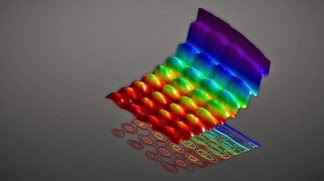
The first photograph that captures the particle-wave duality of light.
A photo essay on famous artists in their studios.

Do you buy lottery tickets? Will you continue to buy them after trying this Powerball Simulator? In a simulated 50 years of playing a quick-pick ticket twice a week I've turned each dollar invested into 7 cents and haven't won more than $7 on any one ticket.

Use Crumbles to make video montages like this one.

Rich person Paul Allen has begun building the world's largest airplane.
Harrison Ford is confirmed for the Blade Runner sequel.

Remember that 4K video I posted of passage through the South China Sea? Here's another seascape that's generated completely by computer.

Begin Rant

This is vile. Not so much that UC Irvine students banned the US flag from their student government room on campus, but the fact that their resolution includes this statement: "Whereas freedom of speech, in a space that aims to be as inclusive as possible can be interpreted as hate speech." Another example of how far-left liberals are actually limiting free speech because apparently these pussies believe that the First Amendment includes the right to not be offended - as if the presence of the US flag actually did that in the first place. The fact that these kids are actually able propose and vote on this nutty issue illustrates the irony of their position. I kinda expected to see the crazy phrase "micro aggression" littered throughout their little policy document.

End Rant

Science reveals all. The average flaccid penis is 3.6 inches in length and the average erect penis is 5.2 inches. Read the details of this study from the British Journal of Urological Surgeons.

...from the chains they revere. ~Voltaire

Saturday, September 13, 2014

There is a foolish corner...

Aaron the Ripper? DNA evidence reveals Jack the Ripper to be an insane Polish immigrant, Aaron Kosminski.

Courtesy of Madden 15 you can generate your own NFL animated GIF. And courtesy of The Atlantic  we see the geographic reach of each NFL team's fans.

Morris Louis, Saraband, 1959. source
In which the case is made that split infinitives are OK: grammar controversies.

Daniel Lanois has a new album coming out in late October: Flesh and Machine. To my ears, that video reminds me a lot of Eno's Small Craft in a Milk Sea. But what I find most baffling is what that third guy is actually supposed to be doing in the video.

In other music news, early reviews of King Crimson's tour are very complimentary.

Begin Rant

OK, so here's a video from Robert Florczak that asks Why is Modern Art So Bad? Mr. Florczak is a painter himself and he's affiliated somehow with Prager University (which seems to be an ultra-conservative "educational" extension of talk-radio personality David Prager) and the Art Renewal Center (which, among other things, is anti-modernism in art - you gotta love organizations who define themselves in terms of what they're against instead of what they're for).

Now I don't care whether you like "modern" art or not - that's your opinion and preference. Plus I'll admit that I don't understand or appreciate a lot of art forms - photography and  sculpture in general, or even some of the specific pieces cited in the video. However, when it comes to painting, if the goal of painting is representation (as the video seems to suggest) then why has it remained relevant after the invention of photography?

So let's now shoot fish in a barrel - I mean address some of the video's points.

He begins with the statement that "the Masters" of painting earned that title through high standards of excellence, building upon the achievements of their predecessors, and aspiring to the highest quality. By "excellence" he appears to mean the excellent ability to accurately represent reality. In an age without photography and without means of rapid information exchange I can imagine that gazing upon those works would produce awe and wonder. Quality, like excellence, implies accuracy in representation. Fine. These paintings leave me kind of "meh" but whatever.

Then he makes the categorical assertion that profound, inspiring, and beautiful artworks were replaced by those that were simply new, different, and ugly. First, "new" in my interpretation is identical to "building upon the achievements of your predecessors." Otherwise, we'd still be doing cave paintings. And by introducing the term "ugly", he's reduced fine art to matters of taste and decor. This is followed by more broad brush categorical statements and cherry picking of specific pieces for comparison. (Kinda like pointing at a Big Mac and saying that all consumption of beef should be banned.)

Then he spouts the dying out of the "ascent to artistic perfection" by which he means how realistically can we paint a bowl of fruit. Since when has perfection been an artistic standard? And then he resorts to cherry picking again when he makes the case for universal standards of artistic quality versus artistic relativism by a) assuming that everyone agrees that his samples of master works truly are outstanding and b) choosing modern works that not everyone would like either (and one with piss in it to really get people riled up).

To bolster his claims he describes a "test" he gives his students in which he displays a Pollock and asks them to describe its merits. Well, the joke's on the kids when he reveals that the supposed Pollock is just a closeup of the smock he wears in his studio. First, the image shown was obviously not a Pollock (and I don't claim to be an expert on such things). He then builds on this error by later claiming that it's impossible for anyone to tell the difference between his apron and a Pollock. (Hey dumbshit - I could.) Second, as a fan of abstract painting I acknowledge a fear of being tricked by liking the painting made by a monkey or elephant and therefore take every online test of that type (and still sometimes only get 80% right). But his test introduces biases right away where the instructor, in a position of power over the students, presents something as a Pollock and therefore would require quite a great deal of gumption on the part of the student to disagree.

I usually don't argue analogies but he then holds up the judging of Olympic figure skating as a model for how the artistic merit of painting should be judged. Talk about a flawed model. This model would work if the judging consisted of defined elements: paint a straight line, a circle, mix two perfectly complementary colors, etc. Then you could have a computer do the judging.

He next introduces the loss of transcendency in art and contrasts that with "modern" art that just tries to shock or make a statement. Not all "modern" art (a category so broad as to be useless in this discussion) is shocking and I also don't like art that exists simply to send a message. But to say that modern works lack a sense of the transcendent is an utter fabrication. (And how exactly would his Olympic art judges rate transcendency?)

At the end he states that the way for us to correct this situation is by the galleries we frequent and the art we purchase. I agree 100%. I do not care if he and I ever cross paths in a gallery - each to our own. That's the way it should be. However, he does say "if the art doesn't sell it won't be made" which assumes that art is all about commerce. That's an entirely different debate, but his fundamental point is inaccurate. For example, how many of the great "masters" died penniless and it was only well after their death that their works sold for millions?

In summary, this guy is a self-righteous ass who wants to impose his opinions on others through weak and spurious arguments. I bet his opinions on music are equally amusing.

End Rant

We all know beans are the musical fruit. But do we really know how beans make music? This video does the explaining.

Burger King is offering this black burger for sale in Japan. I wonder how well it would do here.
Who says you can't learn anything by watching football on TV? During last night's Baylor v Buffalo game they mentioned and undergraduate who had invented a water lens for cheap water purification in developing countries.

Good god, I'm getting cranky.

...in the brain of the wisest man. ~Aristotle

Friday, August 1, 2014

The Joys of Air Travel

How much fun is air travel?

Airlines added baggage fees. Travelers don't want to pay baggage fees. Travelers carry-on their baggage. End result? Steerage class on the Titanic was probably less cluttered and territorial.

Airlines now charge for "food." Travelers don't want to pay for that "food." Travelers bring food onto the plane. End result? The aircraft cabin smells like a Taco Bell dumpster at an August high-noon.

Travelers like their electronic devices. Travelers personalize them with all sorts of sounds. End result? The aircraft cabin sounds like an Akihabara pachinko hall on payday.

Yes, I ride in the back as a matter of practice. And that's why the perks I love the most from my frequent flier plan are the upgrades.

Now, if I could only earn some.


Saturday, May 25, 2013

What Exactly Does a College Degree Mean?

On LinkedIn there's a post by Ilya Pozin (@ilyaNeverSleeps) titled Class of 2013: Your Degree Doesn't Mean Squat. Ilya appears to be a young, successful businessperson. With all due respect to his success, I have a lot of issues with what he wrote.

I'll ignore the provocative title and move to the statement "most employers could care less about your GPA or where you went to school." I'll assume he's commenting on the value of a degree from status schools - Harvard, MIT, Yale, etc. There's truth in that, especially for undergraduates. As long as you attend an accredited school you can get a solid undergraduate education that's valuable. I'm not pretending that all schools are identical. But a B.S. is more about the student than the school.

But on the topic of GPA I guess I'm not like "most employers." I do care about your GPA. GPA means two things: either you're intellectually gifted or you work hard enough to overcome your lack of gifts. Either is good. 

When Ilya writes "getting hired in entry-level positions requires experience and fine-tuned skills, not a 4.0 GPA" I find myself saying no, no, no. We hire aptitude, not skills. Skills can be taught. Skills are how to do a particular thing. A B.S. in engineering is not a trade school. I don't want you graduating with skills at running program X. I want you to understand the fundamentals behind program X and similar programs Y and Z.

So all of that is from Ilya's introduction. Now we begin his five main points.

"Your degree isn't a golden ticket." Agree. There is nothing about a degree unto itself which entitles anyone to anything. But Ilya pushes it a bit too far for my taste: "I’d much rather hire someone who has been freelancing as a web developer for three years than someone who has a master’s degree in computer science. They’re bound to be more passionate, driven, and profitable in the long run..." Hmm. No bias there, eh? As though getting an M.S. doesn't require passion or drive. I'm not really certain what kind of social statement Ilya's making.

"It's all about experience." (And one internship isn't enough.) Ah, it's the old Catch-22 - need experience to get hired, need to get hired to get experience. Ilya suggests freelancing and contract gigs as a way to gain the requisite experience. After all, he started his company when he was 17. Long ago I stopped underestimating what new graduates can do when given the chance. And not all new hires need to arrive full of entrepreneurial zeal - that's not for everyone. They may just want to write code or design wings or whatever - and that's OK.

"Passion will help you succeed." On the surface, I agree. But by this he means that the job candidate should use their cover letter, resume, and interview to demonstrate true passion for working for Ilya's company. In other words, Ilya wants candidates to suck up. C'mon, man. How is a new graduate supposed to have true, demonstrable passion for working for Company X as opposed to doing the same thing for Company Y or Company Z? The passion that new graduates have is for the work, or technology, or field - they lack the experience to know which employer deserves their praise. In fact, it's up the employer to earn the employee's passion.

Also, let's keep in mind that passion can only take you so far. You can be passionate about something but if you also suck at it, well that's too bad. Excellence in the end goal. Passion, like discipline, is a means to an end, not an end unto itself.

"Companies hire the person who is certain to cause the most positive impact." That requires perspective. If you're hiring for skills (see above), certainly someone who has written ten iPad apps can come in and have an immediate impact on your iPad app (especially if you haven't done any yourself). But what if you're looking for long term impact, after that iPad app is done? What if your horizon for positive impact is five years? Do you still hire the most proficient Objective C programmer today?

"Go the extra mile." Seems like we kinda ran out of steam by the time we got to point #5. Don't see how it relates to having a degree or not. Don't see how it relates to new hires versus experienced employees. Try hard. There, I can write that stuff too.

At the end of the article there's a question written in italics what makes me wonder whether it's from Ilya or part of LinkedIn's boilerplate. "What do you wish someone would have told you when you graduated college?" New graduates need to know that over the course of their career they'll derive most of their satisfaction not from the work nor from the employer but from their coworkers and all the other people with whom they interact.

Friday, February 15, 2013

Proof That College Doesn't Make You Smart

No job requires a college degree. That statement unto itself is factually true.

But the rest of Sorry Left AND Right, No Job Requires A College Degree from Forbes is a bucket of warm piss begging to be dumped over the author's head.

Author John Tamny (holder of a BA and an MBA, perhaps from the University of Texas if what teh interwebs tells me can be believed) makes the fundamental error of confusing skills with aptitude.

Again, I'll agree with the premise that a college degree is not required for any job. What's required is a certain set of knowledge, aptitude, and a few skills that you can apply productively to the job.

At the risk of being annoying, I'm going to select some of my favorite lines from the article and present them to you for discussion.

"...computers and calculators have largely made the need for math knowledge something of the past." Wow. Chalk up some good ignorance points right off the bat. This is why McDonald's has photos of the food on the cash registers so as not to confuse their employees and why it's so hard to find a cashier who can actually make change. And maybe if consumers had a bit more math knowledge maybe they wouldn't have taken mortgage loans they couldn't afford. And maybe the electorate would appreciate the federal government's fiscal issues a bit more and apply that leverage at the ballot box. Hell, maybe Congress could use a little more math knowledge to keep us out of fiscal problems in the first place.

"...universities “equipping” students with the knowledge needed to succeed in the real world after four largely wasted (literally and figuratively) years on campus." Now our children are not only chasing an expensive pipe dream but they're alcoholics and drug abusers too. Perhaps Tamny spent too much time on 6th street during his academic tenure in Austin.

"...the dirty little secret is that nothing learned during the four (or five) fun-filled years on idyllic campuses has anything to do with either form of employment." The forms of employment the author refers to are being a barista or an investment banker. This provides a bit of insight into why the investment banking field is so fucked up (and unethical) if the person pouring my latte can also handle credit default swaps. (Recall the author's previous statement about not needing to know math.)

"Ultimately the top financial firms are looking for “good athletes”; as in people who are smart and who work hard. Anything you need to know you’ll learn on the job." No experience necessary! Work from home! Apply today! Maybe the financial world needs a better analogy than the world of professional sports because the headlines there aren't shining beacons of truth.

"As fun as time spent in college is (this writer highly recommends it), it’s pure fantasy to assume that knowledge gained on campus translates to a hyper-dynamic business world. In truth, be it history, finance, engineering, English, or even pre-Med, anything taught is almost by definition yesterday’s news." A startling insight - history is about yesterday's news. Christ, can this get any more moronic? College courses provide a deep background in a field that's incrementally built, that self-reinforces and develops analytic abilities and the ability to synthesize knowledge. And don't even get me started on "hyper-dynamic business world." 

"Thinking of engineers here, and the clamoring for more engineering degrees, anyone teaching the discipline would as a rule be imparting knowledge of no practical use. Sorry, but the latter is just basic economics. If the professor had knowledge of future engineering applications, the same professor would be making billions in the private sector." It's hard to imagine a more insulting statement to academics than this regurgitation of the "those who can do, those who can't teach" argument. It's akin to saying that if finance professors knew anything they'd be making billions in the market instead of teaching. If I knew the winning lottery numbers I'd be rich. It's farcical. And apparently the author is unaware that an engineering professor's primary job is to do leading edge research, not teach.

"An engineering degree signals that you’re smart, and probably hard working, but the major itself doesn’t make you smart." For someone who doesn't place much value in college degrees, he's kinda put engineers up on a pedestal here. I know for a fact that an engineering degree doesn't make you smart - there are plenty of engineers running around out there who aren't all that smart. What he conveniently forgets is the whole idea of GPA, grade point average. Sure you have an engineering degree but is your GPA 2.5 or 3.9? The latter tells me that either a) you were born with a gift or b) you worked hard to achieve.

Which brings me to this statement: "Employers [are] interested that you were smart enough to get into Yale in the first place." So now it's all about the good ol' boy network, damn that achievement thing. Give the secret I Slappa Thigh handshake and we'll put you on the trading floor tomorrow. Sure, being accepted into Yale is an achievement. But what matters is what happens on exit - what did you accomplish while there?

Finally, here's the author's parting advice: "migrate toward a field of employment that you’re passionate about. If so, you’ll never be lazy again and you’ll be very successful." I wonder what measures of success he'll apply to all those underwater basketweaving majors? Hopefully they're not handling funds in my 401(k).

For the record, I have a B.S. and M.S. in engineering. And apparently I'm qualified to write for a magazine.


Sunday, November 18, 2012

An Employee's Parents' Place is NOT the Workplace

I just read something so incredibly stupid that I have to share it with you and rant.

In the November 2012 issue of Free Enterprise, a newsletter from the U.S. Chamber of Commerce, there's an article titled Managing Millennials: A Crash Course by Jennifer Kushell, founder of Young & Successful Media. Here's a quote:
"Parenting: Millennials are extremely close with their parents. It is a fuzzy line these days as to what is the appropriate level of parental involvement in interviews, discipline, contract negotiations, etc. It's up to you to set boundaries, but making helicopter parents your allies can pay off as well."
No, it is not a "fuzzy line." The appropriate level of parental involvement is precisely ZERO. I have a hard time even imagining parental involvement in an interview. If you show up for an interview or a disciplinary meeting or whatever with your parents let me promise you that they'll be shown the door followed shortly by you. It would be a galling display of immaturity and unprofessionalism on the employee's part and shameful meddling on the parents' part.

Certainly, I expect and encourage employees of any age to share workplace issues with their parents (spouse, clergy, friends, life coach, etc.) to gain from the latter's experience and wisdom. But that's to be kept outside the workplace.

And if you're a Millennial I suggest you read the article and decide for yourself whether you want to be lumped into a group that's saddled with so much generational baggage.  That goes for you Gen-X, Gen-Y, Gen-Whatevers too.

Sunday, August 12, 2012

The Art of Newspaper Editing

There are times when reading the newspaper is an act of autopilot - scan headlines, read a few interesting paragraphs, turn page, repeat. And then there are times like this morning when it becomes clear that there's a difference between reading a well-edited publication like the 11-12 August 2012 edition of the Wall Street Journal versus scanning the robot-generated Google News.

At the risk of sounding like a introduction to a 12-step self-help program, I primarily get my news from reading newspapers. I read the Fort Worth Star-Telegram with breakfast each day and on the weekends I read the Wall Street Journal and the Fort Worth Business Press. But I digress.

So what in the WSJ gave me a warm fuzzy?

It will not surprise you that a book review of William Faulkner's The Sound and The Fury (Coloring a Classic, Just as Faulkner Had Hoped) is at the top of my list. You might wonder why they're reviewing a book first published in 1929. The edition in question is a new limited-edition from the Folio Society that does what Faulkner had wanted to do - print the novel's notoriously complex - yet absolutely wonderful - opening section by the idiot Benjy with color codes for the different timelines in his monologue. Some may think that if you need to go to this extreme to make your novel understandable you've failed as a writer. Even Faulkner was unsure whether he got Benjy's section right despite insisting that he didn't make it complex on purpose. I'll agree with the review that "Benjy's monologue is one of the great tours de force of stream-of-consciousness writing..."

What's funny about this edition of the WSJ is the Faulkner review shares a page with a critical review of Better Off Without 'Em: A Northern Case for Southern Secession (A New Turn in the South). Author Chuck Thompson, according to the reviewer, seems to be more serious than humorous - but after all, good humor is based on a kernel of truth. But the juxtaposition of the two reviews further detracts from Thompson's thesis. Faulkner's writing captures something truly American - not Southern - and binds the past, including the Civil War, inextricably with the present. Having been raised a yankee but now having spent nearly three decades in the south I can say that North and South are more alike than different, simply two sides of the same compass needle.

The WSJ doesn't stop there. Having enjoyed many a craft beer in my day I'm always interested their reviews of craft beer and this weekend the WSJ profiles the brewing of Belgian-style lambics in the U.S. But the article's title is The Sour and the Glory - a tasteful nod to Faulkner's novel.

Lest you think I've become a WSJ fan-boy think again. They ruin it all with a horrific photo essay A Salute to the Spider.

Perhaps I'm just a horrible reader and these things are there all the time. But they did make me smile today.


Saturday, July 28, 2012

It takes a government to raise a business?

You've likely heard news or commentary about President Obama's remarks made during a campaign event in Roanoke, Virginia on 13 July 2012. The uproar centers around his statement "If you've got a business -- you didn't build that."

What did the President actually say? The following two paragraphs were cut and pasted directly off whitehouse.gov. No content has been changed. (I did change some of the HTML to remove spaces and improve paragraph formatting.)
There are a lot of wealthy, successful Americans who agree with me -- because they want to give something back.  They know they didn’t -- look, if you’ve been successful, you didn’t get there on your own.  You didn’t get there on your own.  I’m always struck by people who think, well, it must be because I was just so smart.  There are a lot of smart people out there.  It must be because I worked harder than everybody else.  Let me tell you something -- there are a whole bunch of hardworking people out there.  (Applause.)


If you were successful, somebody along the line gave you some help.  There was a great teacher somewhere in your life.  Somebody helped to create this unbelievable American system that we have that allowed you to thrive.  Somebody invested in roads and bridges.  If you’ve got a business -- you didn’t build that.  Somebody else made that happen.  The Internet didn’t get invented on its own.  Government research created the Internet so that all the companies could make money off the Internet.
Let's defuse a few things first.

I don't believe the President's intent was to insult business owners. I can't imagine him planning that speech and thinking "Geez, I really gotta put those uppity business owners in their place."

Nor do I disagree in general with his premise that "someone along the line gave you some help." Teachers, professors, partners, co-workers, friends, trusted advisers, book authors - they all helped me along the way with knowledge, advice, or motivation.

What does piss me off, however, is his dismissal of individual aptitude and effort in the building of a business. He implies that just about anyone can start and maintain a business. After all, there are a lot of smart and hardworking people out there1. He makes it sound like you pretty much have to just show up each day at your business and the money starts rolling in. (Let's just skip over things like assumption of risk, team building, product and service innovation.)

"It takes a government to raise a business" is the equivalent of "it takes a village to raise a child", a platitude that I find equally appalling as it pertains to parental responsibility.

Obama's thoughts on business remind me of a particularly clueless AT&T representative whose entire sales pitch was that we should buy their business phone system because AT&T invented the phone. Needless to say, he didn't get the sale. The President is using the same lame argument - the government invented the internet and built the interstate highway system. Therefore, we should giddily open our wallets because Uncle Sam is the key component of our success (remember, it's not smarts or hard work).

With business income rolling in, the question is what to do with it. He cites wealthy Americans who want to "give something back", presumably to the federal government and presumably for inventing the internet. Who are these people? Cuz I certainly don't know any of them. Every business owner I know - in fact every person I know - tries to minimize their taxes by every legal means. I don't need to pay even more money to Uncle Sam for super highways, information or asphalt, especially since my taxes (and my business' taxes) have paid for them already. And the notion that the government created the internet "so that all the companies could make money off the Internet" is completely ludicrous.

So while I don't believe the President intended to insult business owners, I believe he did so in practice. According to Obama, business owners as individuals are nothing special - just about anyone can start and run a business, as though the USA were the Lake Wobegon of entrepreneurship where everyone is above average and successful. Business success, according to Obama, is possible because of the beneficence of the government. Therefore, paying more taxes in return is virtually a duty. And when he says "you didn't build that" I agree but point out that my business and I have certainly paid the taxes that funded "that."

Someone else wrote that the core issue here is a chicken and egg perspective. Does the government exist to tolerate business? Or do businesses exist to tolerate government? I'll vote for the latter.

1This is just a politician's avoidance of telling people that some of them just aren't suited for business success. It's just like the housing market. Sure, everyone can own a home. We saw how well that worked out. But God forbid that you tell people that they probably can't have something. Let's keep in mind that all we're promised is the pursuit of happiness, not its achievement.


Friday, April 6, 2012

My Rules for Twitter, LinkedIn, and Social Media

I've been thinking about this issue for a while and just thought I'd write it down and get it out of my head. There are some things about social media that should be common sense or at least recommended practices.

Your Twitter avatar (aka the picture in your profile). If you're using the default egg-shaped picture I won't take you seriously.

Your Twitter bio. Leaving your Twitter bio blank is a sin. I can find you and follow you if you put interesting keywords in your bio. For example, CFD is one thing I look for. Also, when you follow me I'll be able to decide whether to follow you back.

There's no guarantee I'll follow you back. There's an unwarranted assumption in the Twitterverse that if you follow me I'm obliged to follow you back. That just ain't gonna happen. Maybe after I figure out who you are and see what you Tweet about.

Tweets with just a link. If I don't know you and you Tweet with just my handle and a link I won't click on the link. I'd have to be stupid to click on that link. I'd have to be doubly stupid to click on one of these links from someone with the egg-head avatar.

Do I look stupid?
Twitter followers who are a business. I wonder sometimes why some businesses follow me. This is where the bio comes into play. For example, I'm being followed by a Chevrolet dealership. I'm not actively looking for a car and although my first car was a Chevy Cavalier that I liked another Chevy isn't at the top of my list when I'll go looking again. But possibly, just maybe, the person who who Tweets for the car dealer is truly interested in following me instead of just shoving an ad in my face. Without a bio how am I supposed to know?

I'm not looking for a Chevy. And running? Hah! Should I block them?


Unqualified LinkedIn connection requests. If you want to connect with me (friend, like, join, follow or whatever term LinkedIn uses) please take a minute and add a comment to the request that tells me who you are. Because LinkedIn is for professional stuff I'm a bit pickier about who's in my network relative to Twitter, for example. So if I don't know who you are, I'm not likely to agree to the connection. Just say "we met at conference X" or "I saw you at university Y" or whatever that will jog my memory. If we haven't met say "I'm interested in CFD too" or something.

I don't think I'm asking too much. Do you?

Sunday, January 22, 2012

Too Bad Tim Tebow Is White

The hue and cry about Denver quarterback Tim Tebow's overt religiosity is simply due to the fact that he's a big, dorky, white, self-proclaimed virgin. He's also a quarterback with a throwing motion that's a cross between a Bulgarian shot putter and Sandy from accounting, the right fielder on the office's softball team.

Would so many dare criticize him so publicly if he were black? I don't think so. Imagine if Michael Vick had found Jesus while in prison and had become a vocal fan boy. Do you think he'd be mocked so vehemently? I don't. (That's not to say that he wouldn't still be haunted by the dog fighting business. However, it is interesting to me that folks are much less indignant about players' crimes against people. But I digress.)

Perhaps it's because we want our players in the National Felons League (the rapists, wife beaters, drug runners, anger management candidates) to have failed at least once so we fans can graciously grant them our forgiveness before permitting them to succeed on the field. But does anyone want Ben Roethlisberger dating their daughter?

Is Tim's post-TD Tebowing any more ludicrous than Ray Lewis' pregame dance? Hardly. But the prospect of mocking Lewis is much less palatable than mocking Tebow. After all, guys like Tebow have that whole "turn the other cheek" thing working against them so the perceived threat of reprisal is minimized. It's kinda like that scene from Fight Club where the homework is to pick a fight with a random person.  When that person happens to be a priest the results are humorous at best.

It's a bit incongruous that while many want the No Fun League to back off touchdown celebrations involving choreography, Sharpies, popcorn and the like even more scorn a guy for taking a knee. Discount double check anyone? The NFL's war on extended fingers doesn't include those raised toward the heavens saluting a deity or a dearly departed relative.

Brett Favre's performance during the game following his father's passing was as transcendent as anything I'll ever see in football. It was magical, there's no other way to explain it. Being "in the zone" is a vast understatement. He was operating on another plane. But years later Brett was Weinering before Rep. Anthony Weiner gave it a name.

In an editorial, Sally Jenkins quotes theologian Michael J. Murray's position that we're all ill at ease with intrusions of personal faith. They can make us question whether we're backing the wrong team (and I don't mean the Broncos).  If we're not currently a fan they can make us question if perhaps we ought to buy a team jersey. They make us defensive, especially when they appear out of context like during a sporting event. A lot of the needling also misses (perhaps purposefully for comedic purposes) the point. As Jesuit theologian James Martin writes, its not about individual prayers heard and the implication that other prayers are not, it's that with faith all may not go well but in the end everything will be alright.

Frankly, I don't care one way or the other. Preferably, everyone will get mocked equally. I'm not a religious person so I don't care if anyone thanks God for a touchdown. I'm not a fan of Tebow's so I don't care whether he succeeds or fails. But it does seem that Tebowing is fairly benign relative to other behaviors in the NFL.

Maybe Jesus doesn't care either.

source


Thursday, October 27, 2011

I'll Take "Things You Hear at a Conference" for $500, Alex.

I spent three days this week with about 350 other people at the Business of Software Conference. Great event. If you're in the software business you should really attend at least once. But one hears many things at conferences.

  1. Speakers dropping f-bombs.  Yes, the speakers.  During their talks.  On their slides. Honestly, it doesn't bother me unless it's overdone. Which of course, one speaker did.  I get it - you're hip and edgy and compensating for your weak-ass content. Please get off the stage.
  2. Ringing cell phones.  Jeezuz kee-rist people, turn off your fucking ringer.  I swear, 4-5 times each day I'd get to hear someone's poorly chosen ring tone. And don't get me started on ring tones. Vi-ba-rate.
  3. People talking. In the audience. During the presentations. Is this junior high? Can you spell d-o-u-c-h-e b-a-g?
Today's post was sponsored by the hyphen.

Saturday, January 29, 2011

F. Lee Bailey Needs to Assure Us That The O.J. Verdict Was Correct

Have you heard?  F. Lee Bailey's gonna write a book about People v Orenthal James Simpson.  He's gonna show us that O.J. is truly innocent of the crimes with which he was charged.  And he's released a three-part teaser on his web site.  (I'm not going to cite the URL - you'll have to Google it yourself.)

I was able to read all three parts in about an hour or so.  Other than rehashing evidence you would've seen had you watched the trial on TV and pissing on police officers in general, it seems that Bailey's ace in the hole is a witness never called during the trial "who may well have seen the killers or their confederates."  Truly that's about all there is to Bailey's teaser.  Unless you want to count the five pages on the legal definition of evidence with which he begins the book.  Holy Christ, after suffering through that I probably wouldn't have cared even if he had a photograph of the crime in progress.

I fully understand and appreciate the vital role played by defense attorneys in our legal system.  I do not despise Bailey and the rest of the defense team simply because they represented O.J.  But I'm baffled as to what motivated Bailey to foist this turd on the public.  Is this his "No, really!" moment to explain his involvement?  Is he feeling guilty in his old age?  Has he gone slightly senile?

The Above the Law web site wrote something about this that made me laugh: the headline for this story should be "F. Lee Bailey Evades Caretakers, Gets to Internet Before Somebody Stops Him."

I was able to watch virtually all of the TV coverage of the trial and the only book on the subject that I've read is the one by the two police detectives.  I  believe that O.J. is guilty. And I'll add the obligatory disclaimer that I also believe Mark Fuhrman is a stupid ass.  And F. Lee Bailey's book is gonna suck.

P.S. Next time you put a PDF of your book online, don't use a crappy OCR scan that can't even properly resolve the name O.J.